

Criteria for recognizing sentience
There are three general criteria for deciding whether a being is sentient. These involve considerations that are (1) behavioral, (2) evolutionary, and (3) physiological.

The idea that only humans are sentient
Sentience is the capacity to have positive and negative experiences, such as feeling pain and pleasure. Sentience can only exist in a creature who is conscious…
What beings are conscious?
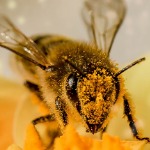
Given the criteria we have for considering whether a being is conscious, it is reasonable to conclude that vertebrates and a large number of invertebrates are conscious. The clearer cases are those of animals…

What beings are not conscious
Beings that have no centralized nervous systems are not sentient. This includes bacteria, archaea, protists, fungi, plants and certain animals. There is the possibility that a number of animals…
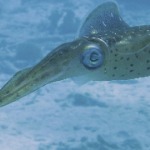

An illustrated physiology of nervous systems in invertebrates
Most animals in the world are invertebrates. If most invertebrates are sentient, then we can conclude that most of the suffering of animals…

Indicators of animal suffering
If we accept that certain behaviors in humans are indicators of suffering, then evolutionary logic tells us that these same behaviors in nonhuman animals show us that they are suffering. For example…


